
Summary 1+2:
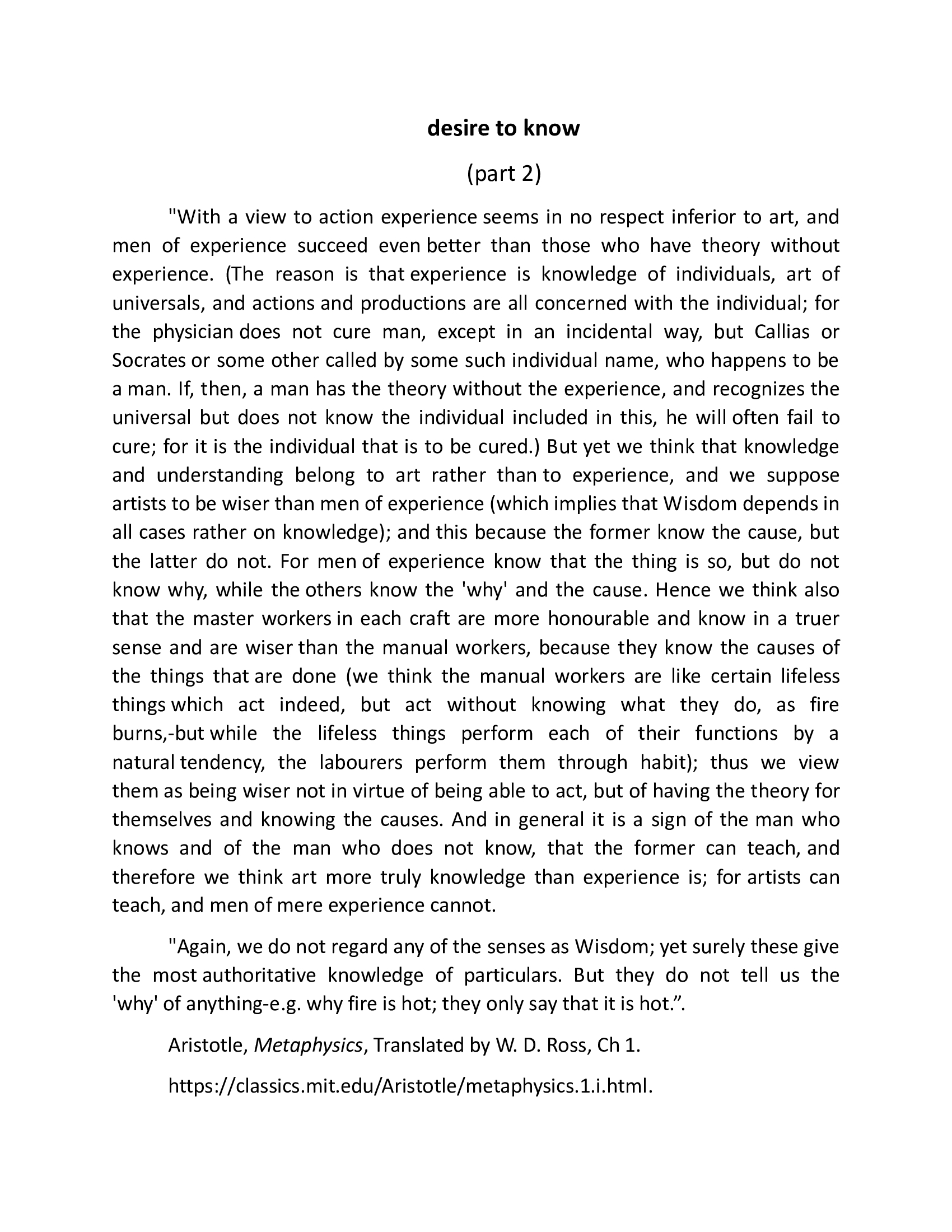
In the first part, Aristotle explains that all humans naturally desire to know; knowledge begins with sense perception, which leads to memory, then experience, and finally art (techne) and science.
In the second part, he distinguishes between experience and art:
- Experience is the knowledge of particular cases (what happens).
- Art is the knowledge of universal causes (why it happens).
Therefore, Aristotle regards art and science as more philosophical and wiser than mere experience, for they involve understanding causes and principles, not merely observing facts.
- Teacher: PrFARID ZIDANI